Have you ever left a yoga or fitness class with more lower back pain than when you arrived? You’re not alone, and it doesn’t mean yoga is “bad” for your back. It usually means the practice wasn’t adapted to your body.
What to expect in this blog
Why a yoga class can make back pain worse
Overloading the back or holding a poor posture, in class or at your desk, is a common culprit. Throwing yourself into exercises without paying attention to how your body responds raises the risk of injury.
One of the main underlying causes of back pain is too little movement. When we move too little, muscles, ligaments, tendons, bones and connective tissue are poorly maintained. Stress plays a role too. And when we sit badly, the back gets less oxygen, especially the lower back, which already has limited mobility.
What does the research say?
Yoga is one of the better-studied approaches to chronic low back pain, so it is worth knowing what the evidence shows, including its limits.
An early meta-analysis of ten randomized trials with 967 patients found strong evidence for short-term effects on pain and back-specific disability, and a lasting effect on pain in the longer term (Cramer et al., 2013). Its authors concluded that yoga can be recommended as an additional therapy. nih
The most recent and rigorous Cochrane review (Wieland et al., 2022) is more cautious. It found low- to moderate-certainty evidence that yoga compared with no exercise gives small improvements in back-related function and pain, which are not clinically important. Compared with other back-focused exercise, such as physical therapy, there was little or no difference in back-specific function. A 2020 meta-analysis reached a similar conclusion: yoga had the same effect on pain and disability as other exercise or physical therapy (Zhu et al., 2020). kups.ub.uni-koeln.de +2
In practice, yoga is not a miracle cure. It is an effective and enjoyable way to stay active, and it works about as well as other forms of exercise. The best exercise is the one you will actually keep doing.
Book your trial class for just €7.50
A word of caution
Safety matters here. The Cochrane review notes that the risk of harm was higher with yoga than with no exercise, but similar to that of back-focused exercise. The most common adverse event was a temporary increase in back pain. Yoga was found to worsen back pain in about 5 percent of participants, without serious adverse effects. The lead author also stressed that the yoga exercises in the studies were developed for low back pain and were led by experienced practitioners. www.cochrane.org +2
So choose your class and teacher carefully, and tell your teacher about your back before the class starts.
First aid for back complaints
Yoga offers plenty of helpful postures for back pain. Keep moving, but stick to gentle exercises.
Protect your lower back during core work. Place your palms flat on the floor under your lower back or sitting bones, so that you can feel your whole lower back resting on the mat. Keep your knees bent.
Cat pose (cat-cow) gently mobilizes the spine.
Knees to chest: lie on your back and draw your knees towards your chest.
Legs up the wall: lie on your back with your legs resting fully against a wall, so that your whole lower back stays in contact with the mat.
Here are two simple breathing exercises to try at home.
1. Seated awareness of the sitting bones Sit cross-legged and feel your sitting bones. Let them become heavy, and feel an upward movement rising from them towards your lower back. You can rest your hands on your lower back while you direct your attention and breath there. You will feel your breath in your belly and in your back. After a while, you may notice space opening up in your lower back.
2. Belly and back breathing Place one hand on your lower belly and one on your lower back (your sacrum). Feel your belly breathe. As you exhale, notice your navel drawing in towards your spine, in the direction of the sacrum. After a while, you may feel space opening up in your lower back here too.
These exercises are slow and gentle by design. They build body awareness, which is one reason mind-body approaches such as yoga are popular for back pain.
Practical tips
Listen to your body. Mild stretching is fine. Sharp or radiating pain is a signal to stop.
Bend your knees in forward folds and core exercises to take pressure off the lower back.
Build up gradually, especially in the first weeks, when temporary increases in pain are most common.
Move throughout the day. Don’t rely on one class a week to make up for hours of sitting.
Seek medical advice if your pain is severe, new, follows an injury, or comes with numbness, weakness or other worrying symptoms.
Conclusion
Yoga can be a safe and valuable part of managing lower back pain, provided it is gentle, mindful and adapted to you. It is not a cure-all, and the research shows its benefits are modest and similar to other exercise. But combined with regular movement, good posture, stress reduction and conscious breathing, it can help you create more space, literally and figuratively, in your lower back.
This blog is for general information and does not replace medical advice.
References
Cramer, H., Lauche, R., Haller, H., & Dobos, G. (2013). A systematic review and meta-analysis of yoga for low back pain. Clinical Journal of Pain, 29(5), 450-460. doi:10.1097/AJP.0b013e31825e1492
Holtzman, S., & Beggs, R. T. (2013). Yoga for chronic low back pain: A meta-analysis of randomized controlled trials. Pain Research & Management, 18(5), 267-272. doi:10.1155/2013/105919
Saper, R. B., et al. (2017). Yoga, physical therapy, or education for chronic low back pain: A randomized noninferiority trial. Annals of Internal Medicine, 167(2), 85-94.
Wieland, L. S., Skoetz, N., Pilkington, K., Harbin, S., Vempati, R., & Berman, B. M. (2022). Yoga for chronic non-specific low back pain. Cochrane Database of Systematic Reviews, (11), CD010671. doi:10.1002/14651858.CD010671.pub3
Zhu, F., et al. (2020). Yoga compared to non-exercise or physical therapy exercise on pain, disability, and quality of life for patients with chronic low back pain: A systematic review and meta-analysis of randomized controlled trials. PLoS ONE, 15(9).
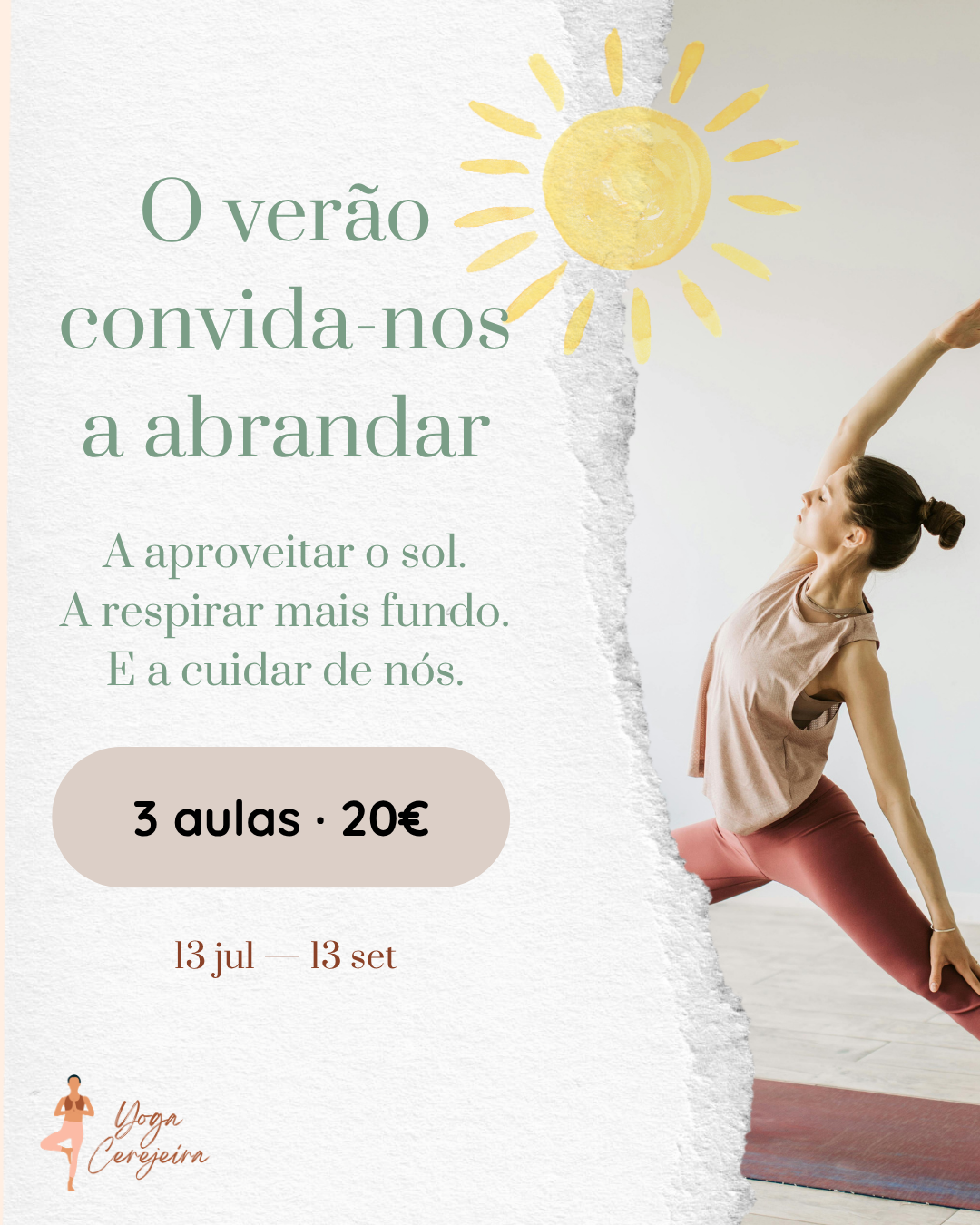
✨ Passe de verão: 3 aulas por apenas €20 ✨ Combina livremente: yoga, pilates, como quiseres ✨ Sem mensalidade, sem complicações – só boa disposição em movimento